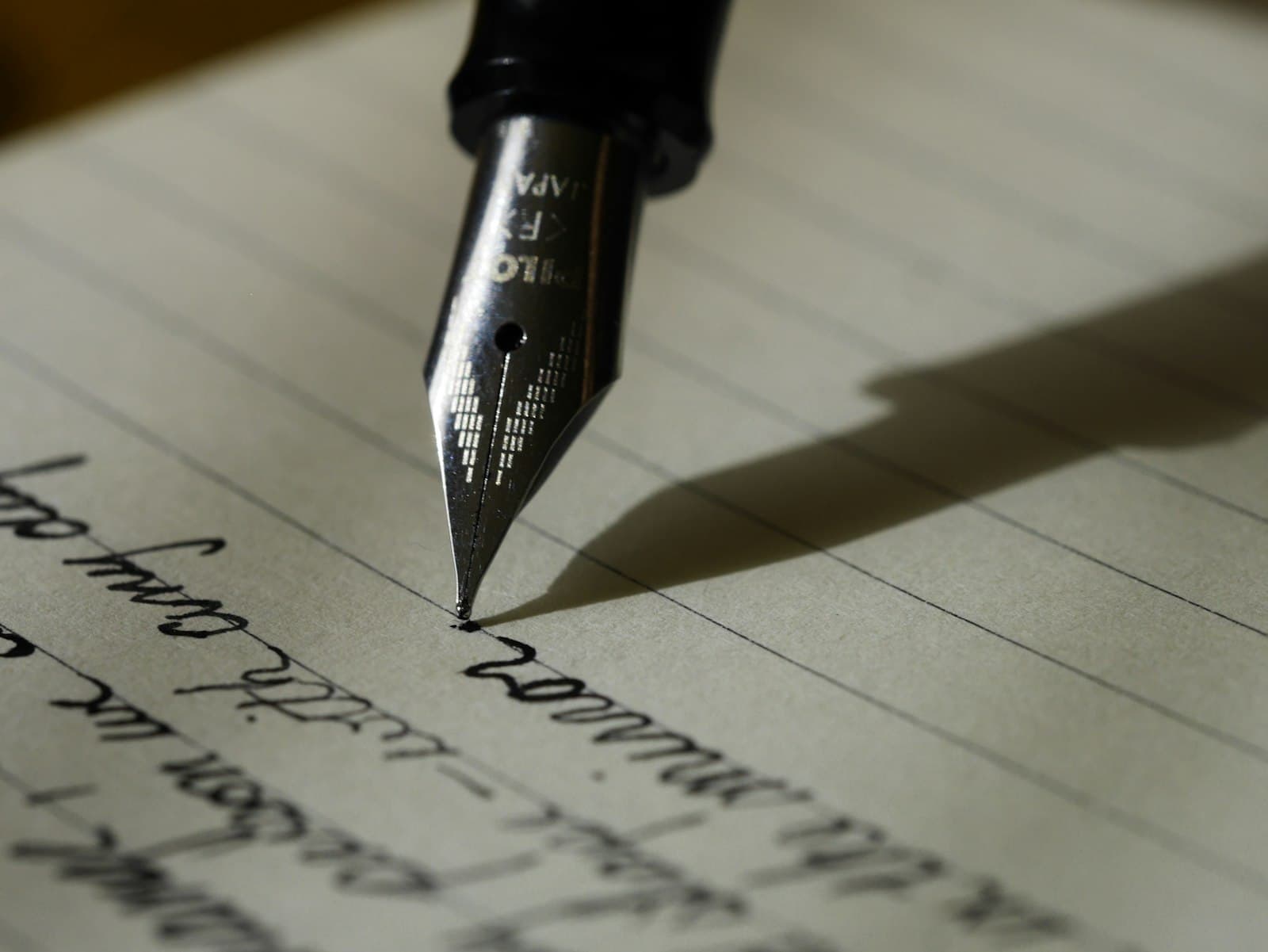
The trick is the role you give the AI. If you ask it to write your essay, it will, and the result will sound like AI. If you ask it to grade your essay and tell you what to fix, it will, and the result will still sound like you because you did the writing. The first workflow gets students rejected. The second one gets essays better.
This post is the workflow.
Why AI-written essays get caught
Three reasons, in increasing order of severity.
The phrasing pattern. Models default to a specific cadence. Long compound sentences. Tidy parallel structure. Predictable transitions. Adverbs in front of verbs. Once you read enough AI text, the pattern is unmistakable. Admissions readers see thousands of essays a season, including increasing numbers of AI-assisted ones. The pattern is becoming legible.
The lack of specifics. Models hallucinate plausibly. They will write that you "felt a profound shift" without naming what shifted. They will write about "the smell of the kitchen" without committing to which smell. Real memory has weird, specific edges. AI writing rounds the edges off.
Detection tools. Most schools now have access to AI detection systems. They are imperfect but improving fast. The risk is real even if you got away with it last year.
The workflow that works
Use AI as a reviewer, not a writer.
- Write the first draft yourself, no AI. Bad sentences are fine. The point is to get your real voice on the page.
- Run the draft through an AI essay reviewer. Read the diagnostic. The model will tell you whether your hook lands, whether your voice is distinct, whether your specifics are doing work.
- Take the critique seriously, but do the rewriting yourself. If the reviewer says your opening is the situation rather than the moment, find the moment in your draft and start there. Don't ask the model to rewrite the opening.
- Run it again. Compare the new score. If it climbed and the diagnostic moved on to a different problem, you fixed the right thing. If it stayed flat, your fix didn't address the real issue.
- Stop after three passes. Past that, you're overfitting to the model. The next read should be human.
This workflow uses the AI for what AI is good at (consistent diagnosis at scale) and keeps you on the keyboard for what AI is bad at (your actual voice).
What to never let AI do
Some lines you should not cross.
Never paste an AI-written sentence into your essay. Not even "just one." The cadence will not match the rest of your draft and a careful reader will catch the seam.
Never ask an AI to write "in your voice" based on a sample. This works less well than people think. The model will produce a stylistic average that approximates your voice without being it. Worse, it gives you false confidence.
Never let an AI generate the topic. If the story isn't yours, the essay can't be. AI is fine for editing direction once you have a story you actually care about. AI is dangerous when you're using it to figure out what to care about.
What to let AI do
The opposite of all of the above.
Diagnostic scoring. A good AI essay reviewer will tell you the hook is generic, the voice is interchangeable, or the specifics are vague. This is the same feedback a great editor would give you, faster and at any hour.
Targeted fix suggestions. "Start later in the scene." "Cut the abstract reflection in paragraph four." "Replace the metaphor in the second paragraph; it's a cliche." These are moves you execute yourself.
Comparison reads. Some tools, including K-1 MAX inside the Kolly app, benchmark your essay against accepted essays at the schools you're applying to. That's a useful comparison your friends and parents can't do.
The "does this sound like AI" test
After every revision, run this checklist on your draft.
- Read it out loud. Does the cadence sound like how you actually talk on a long topic? If it sounds like a TED talk, it's AI-shaped.
- Find the most specific noun in the essay. Is it a real, weird, particular thing? Or is it a category like "the kitchen" or "my room"? Specifics anchor real memory. AI rounds them off.
- Find the most surprising sentence. If you can't, the essay is too smooth.
- Pick a random paragraph. Could it have been written by any thoughtful 17-year-old? Or only by you? If it could have been written by anyone, it's not landing.
If your draft fails any of these, it isn't necessarily AI-tainted, but it has the same symptoms admissions readers flag. Fix the symptoms either way.
The honest version
AI essay tools are now good enough that pretending they don't exist is a worse strategy than using them carefully. The students who win this cycle will be the ones who use AI to diagnose without letting it write. The ones who lose will be the ones who let the model put words on the page.
Use the AI essay reviewer for the diagnostic. Keep your hands on the keyboard for the rewrite.